

In climate-vulnerable contexts like Somalia, climate shocks are becoming more frequent, severe, and unpredictable. Droughts, floods, heat waves, and erratic rainfall patterns are no longer isolated events; they are shaping livelihoods, displacement, food security, and conflict dynamics. For NGOs and humanitarian actors, adapting effectively requires more than experience or intuition; it requires reliable, actionable climate data. Climate data enables organizations to anticipate risks, target interventions more precisely, and design adaptation programs that respond to real and evolving climate realities.
What Is Climate Data in Adaptation Programming?
Climate data refers to information collected and analyzed to understand climate patterns, trends, and risks. In adaptation programming, this includes:
- Historical climate records (rainfall, temperature, drought cycles)
- Seasonal forecasts and early warning data
- Remote sensing and satellite imagery
- Community-based climate observations
- Hazard and vulnerability mapping
When integrated into programming, this data informs when, where, and how interventions should be implemented.
Why Climate Data Matters for Adaptation
Anticipating Climate Risks Before They Escalate
Climate data helps NGOs move from reactive responses to anticipatory action. By identifying early warning indicators such as delayed rainfall or rising temperatures, programs can trigger early interventions that reduce losses and humanitarian needs.
Improving Targeting and Geographic Prioritization
Not all communities face the same climate risks. Climate data allows organizations to:
- Identify high-risk zones
- Target the most vulnerable populations
- Align interventions with localized climate realities
This leads to better use of limited resources and stronger outcomes.
Designing Climate-Smart Interventions
Adaptation programming informed by climate data supports:
- Climate-smart agriculture
- Water resource planning
- Resilient infrastructure design
- Livelihood diversification strategies
Data ensures that solutions are context-specific rather than generic.
Turning data into impact requires more than collecting information; it requires intentional systems, leadership commitment, and a culture of learning.
Practical Example – Climate Data in Somalia
In Somalia, recurrent droughts and floods severely affect pastoral and agro-pastoral communities. NGOs using climate data have been able to:
- Align cash assistance with drought forecasts
- Support farmers with seasonal planting guidance
- Strengthen early warning and community preparedness systems
- Integrate climate risk analysis into resilience and livelihoods projects
This approach improves both short-term response and long-term resilience.
Strengthening Decision-Making through Climate Data
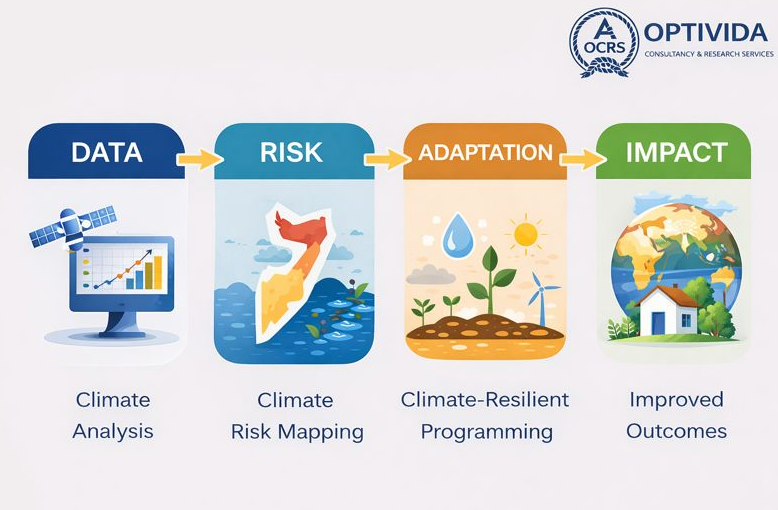
Climate data supports evidence-based decisions across the project cycle:
- Assessment: Identifying climate-driven needs
- Design: Selecting appropriate adaptation strategies
- Implementation: Timing activities according to climate conditions
- Monitoring: Tracking climate impacts on outcomes
- Learning: Adapting programs based on new data
This strengthens accountability to both communities and donors.
Challenges in Using Climate Data (and How to Address Them)
Data Gaps and Accessibility
Solution: Combine global datasets with local and community-generated data.
Technical Capacity
Solution: Build staff capacity in basic climate analysis and interpretation.
Translating Data into Action
Solution: Embed climate data into decision-making processes, not just reports.
The Future of Climate-Informed Adaptation Programming
As climate risks intensify, donors increasingly expect adaptation programs to demonstrate data-driven design. NGOs that integrate climate data into their planning and learning systems will be better positioned to deliver effective, scalable, and fundable interventions.
Climate data is no longer optional; it is foundational to effective adaptation programming.
Climate adaptation is most effective when grounded in evidence. By integrating climate data into assessments, design, and implementation, NGOs can anticipate risks, protect vulnerable communities, and deliver programs that remain relevant in an increasingly uncertain climate future.
Donors increasingly recognize that climate action in Somalia is inseparable from humanitarian response and development programming. NGOs with strong contextual knowledge, local partnerships, and data-driven analysis are well positioned to access innovation-focused climate funding.
🔷 CALL TO ACTION (CTA)
Is your organization integrating climate data into adaptation programming?
Optivida Consultancy & Research Services supports NGOs to strengthen climate analysis, resilience planning, and data-driven decision-making.
👉 Contact us to build climate-smart, evidence-based programs.