NGO RESOURCE HUB
Download Practical Tools, Templates, SOPs and Publications to Strengthen NGO Fundraising, MEL and Programme Delivery.
1. PUBLICATIONS
Explore insightful publications, research papers and practical guides developed by Optivida to support NGOs and development professionals. These resources provide in-depth knowledge on fundraising, programme design, MEL systems and humanitarian response.
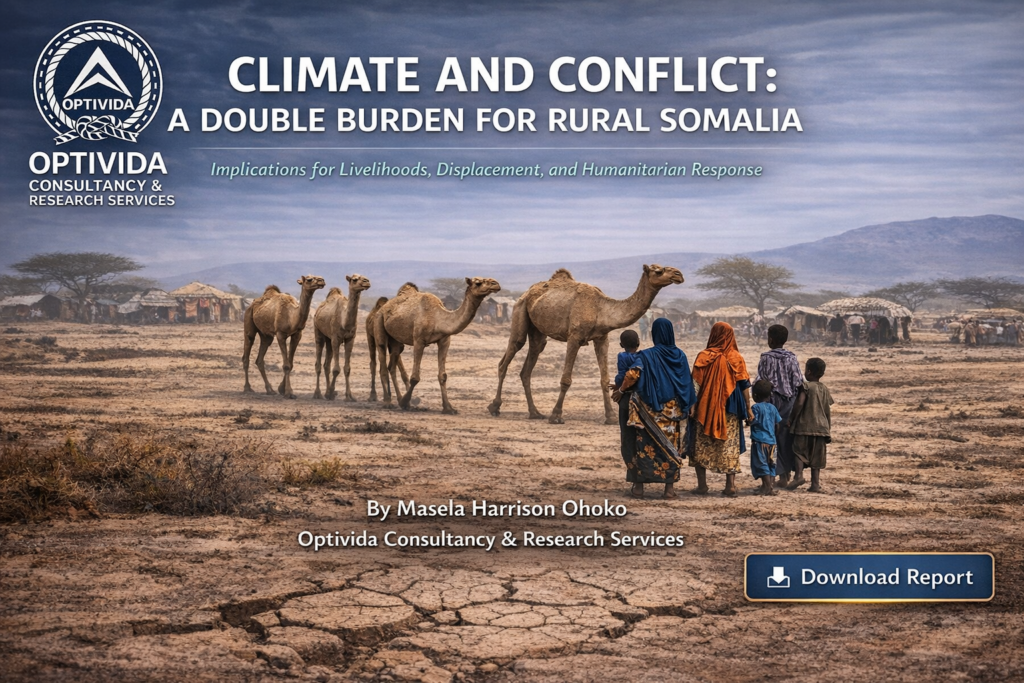
Climate and Conflict: A Double Burden for Rural Somalia
This policy paper examines the intersection of climate change and conflict in rural Somalia, highlighting how recurrent drought, resource scarcity, and insecurity create a “double burden” for vulnerable communities. It explores the impacts on livelihoods, displacement, and access to basic services, while identifying key gaps in current humanitarian and development responses.
Drawing on contextual analysis and practical insights, the paper provides actionable recommendations to strengthen climate resilience, promote conflict-sensitive programming, and support locally led solutions. It is intended for humanitarian actors, policymakers, and development partners working to address the climate–conflict nexus in fragile and drought-affected settings.
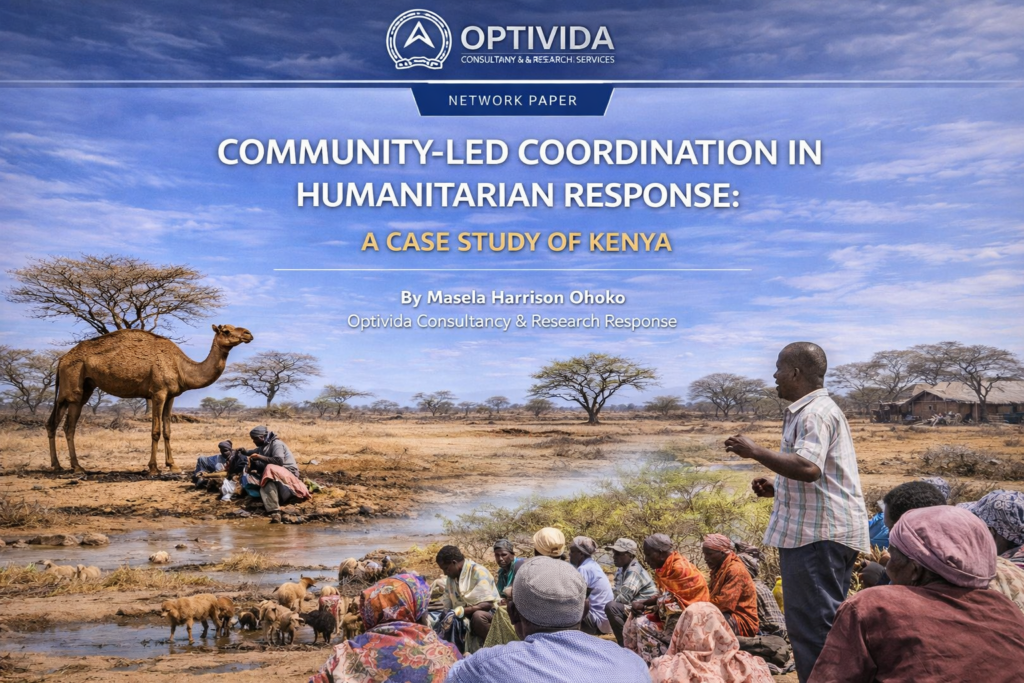
Community-Led Coordination in Humanitarian Response: A Case Study of Kenya
This network paper examines the role of community-led coordination mechanisms in strengthening humanitarian response in Kenya. It explores how local structures contribute to needs identification, response planning, resource coordination, and accountability, particularly in arid and semi-arid regions (ASALs), urban informal settlements, and refugee-hosting areas.
Through a detailed case study and analytical framework, the paper highlights key strengths, challenges, and opportunities for integrating local coordination systems into formal humanitarian architecture. It also provides practical, actionable recommendations to advance localisation, strengthen governance, and improve collaboration between local and international actors.
This publication is a valuable resource for NGOs, donors, policymakers, and practitioners seeking to enhance effective, inclusive, and sustainable humanitarian response systems.
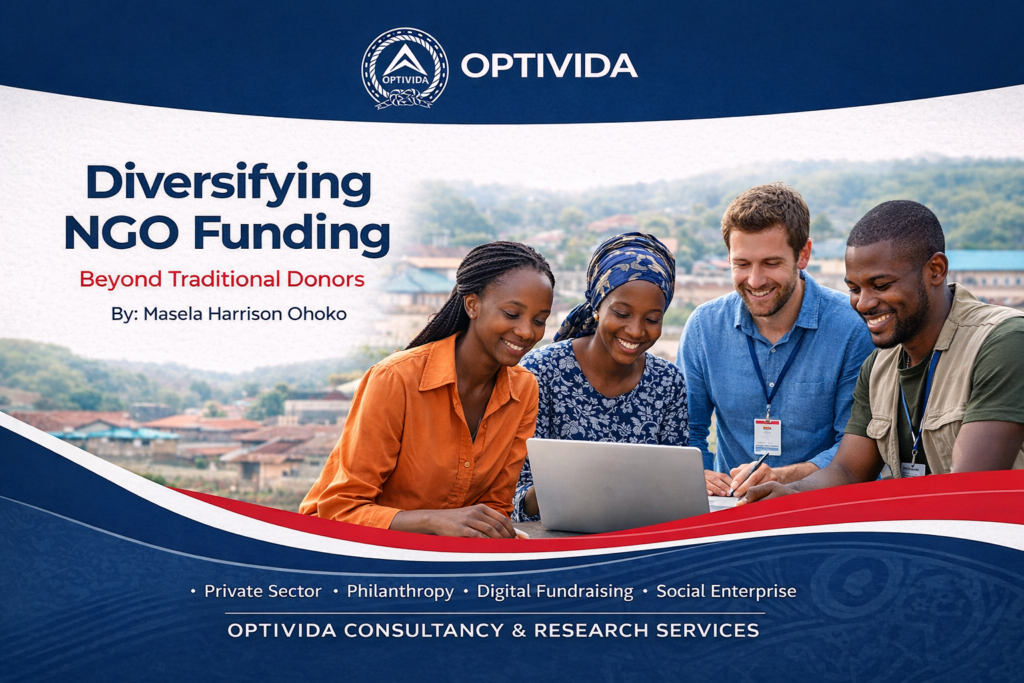
Diversifying NGO Funding: Beyond Traditional Donors
A practical, step-by-step guide designed to help NGOs diversify funding sources beyond traditional donors. This publication provides actionable strategies, real-world case studies, and ready-to-use tools to strengthen fundraising, sustainability, and programme impact.
2. NGO TOOLS & TEMPLATES
Access ready-to-use NGO tools and templates designed to simplify programme design, fundraising, and monitoring processes. These practical resources help organizations improve efficiency, strengthen systems and deliver measurable impact.
Funding Engagement Plan & Strategies (2026)
A practical framework to help NGOs plan, prioritize, and manage strategic donor engagement and funding relationships.
Risk Management Framework for NGOs (2026)
A practical framework to help NGOs identify, assess, mitigate, and monitor organizational and project risks in line with donor and compliance expectations.
NGO Grant Application Readiness Checklist (2026)
A practical pre-submission checklist designed to help NGOs assess eligibility, technical quality, budgeting, safeguarding, and donor compliance before submitting grant applications.
Donor Readiness Scorecard for NGOs (2026)
A practical self-assessment tool to evaluate an NGO’s preparedness for donor funding, including governance, finance, compliance, MEL, and risk management.
NGO Funding Readiness Checklist & Assessment Tool (2026)
A practical self-assessment tool designed to help NGOs evaluate their readiness for donor funding. It covers strategic clarity, governance, systems, compliance, proposal preparedness, and risk management, with a scoring guide to identify gaps and strengths.
PDF | Fundraising & Organizational Capacity | Free Resource
3. AI SOPS & OPERATIONAL GUIDES
Explore AI-powered operational guides and standard procedures designed to enhance proposal development, donor research and programme design. These resources support ethical, efficient and innovative programme delivery.
Standard Operating Procedures (SOP) for Responsible AI Use
Artificial Intelligence (AI) is transforming how NGOs design programmes, mobilize resources, and engage donors. However, its use must be ethical, responsible, and aligned with global standards.
This practical SOP developed by Optivida Consultancy & Research Services provides step-by-step guidance on how organizations can integrate AI into programme design, proposal development, donor intelligence, and digital fundraising.
The SOP covers:
✔ AI for proposal development and programme design
✔ Donor intelligence and funding opportunity mapping
✔ AI-driven digital fundraising strategies
✔ Ethical and responsible AI use (data protection, bias, transparency)
✔ Governance structures and approval workflows
✔ Practical tools, templates, and AI-assisted workflows
This resource is ideal for NGOs, civil society organizations, programme teams, MEAL specialists, and resource mobilization professionals seeking to strengthen innovation and competitiveness.
Need support to implement AI in your organization?
Contact us: info@optividaconsultancy.com
👉 Download and adapt for your organization.
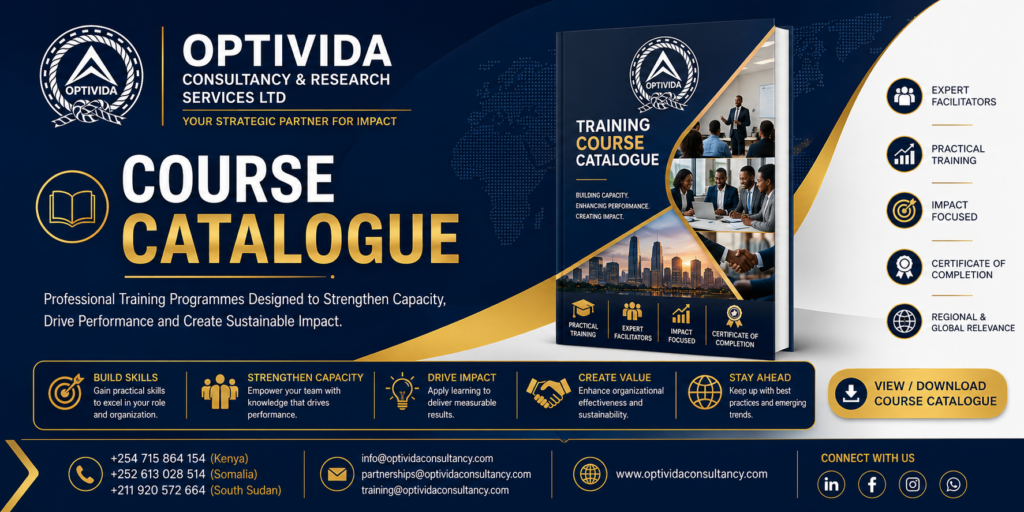
NGO & Humanitarian Training Course Catalogue
Explore Optivida’s comprehensive training catalogue featuring over 50 professional courses in Resource Mobilization, Proposal Writing, MEAL, Humanitarian Programming, Safeguarding, Strategic Planning, Climate Resilience, Research, Leadership and Organizational Development.Designed for NGOs, INGOs, UN Agencies, Government Institutions, CBOs, FBOs and Development Professionals.
POPULAR TRAINING COURSES
✓ Proposal Writing & Resource Mobilization
✓ Donor Mapping & Intelligence
✓ Monitoring, Evaluation, Accountability & Learning (MEAL)
✓ Project Cycle Management
✓ Strategic Planning & Organizational Development
✓ Humanitarian Principles & Sphere Standards
✓ Safeguarding & PSEA
✓ Child Protection & GBV Programming
✓ Climate Change Adaptation & Resilience
✓ Disaster Risk Reduction (DRR)
✓ Research Methodology & Data Analysis
✓ Leadership & Governance
✓ Institutional Capacity Strengthening
✓ Grant Management & Donor Compliance
✓ Partnership Development & Stakeholder Engagement
